

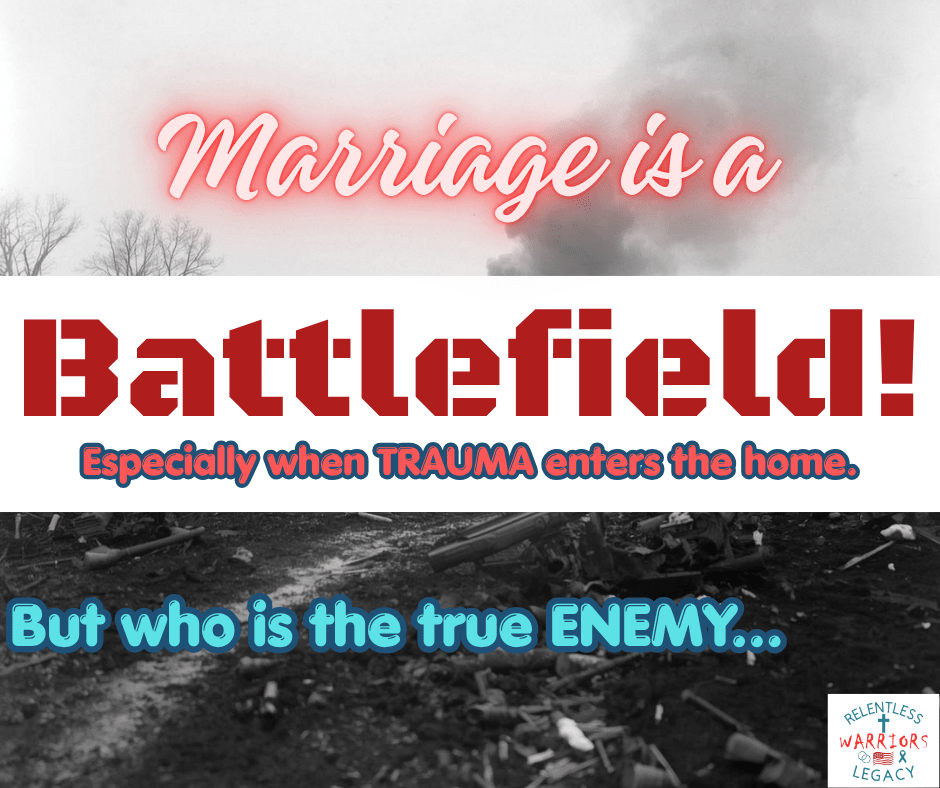
Fun history fact: World War I was the first war in which multiple modern weapons were used together on a large scale—machine guns and rifles, landmines, and barbed wire.
Imagine what that battlefield looked like. Bullets flying constantly, with no way to stop them. Watching every step so you don’t trigger a landmine. Then running into a wall of barbed wire that feels impossible to cross, leaving little hope of advancing against the enemy.
What do you think it felt like to stand on that battlefield?
I imagine it felt hopeless and exhausting. It probably felt impossible to even begin the fight—let alone win it.
Now imagine your marriage looking like that battlefield.
Bullets — Life’s everyday stressors: chores, kids’ activities, minor financial disagreements, work pressures, and all the little things your spouse does that slowly start to irritate you. These are the constant, daily hits.
Landmines — The things you try to avoid, but they appear out of nowhere: the death of a loved one, car trouble, job loss, a broken appliance, or illness. They don’t happen every day, but when they do, they can trigger a chain reaction of stress in every area of life.
Barbed Wire — Trauma. Things like PTSD, depression, anxiety, and addiction. These create walls that feel impossible to climb over or break through.
Is this what your marriage looks and feels like?
And where is your spouse on this battlefield?
Are they standing beside you—fighting on the same side against the real enemy?
Or are they across from you, and the two of you are fighting each other instead?
Most of us place our spouse on the other side of the battlefield and begin to see them as the enemy. But what if there were a better way to fight?
It starts with you and your spouse standing side by side—as battle buddies. Together, you face the bullets, the landmines, and the barbed wire. The enemy is still throwing everything it has at you, but now you’re no longer fighting alone—you’re fighting together.
Let’s take it a step further.
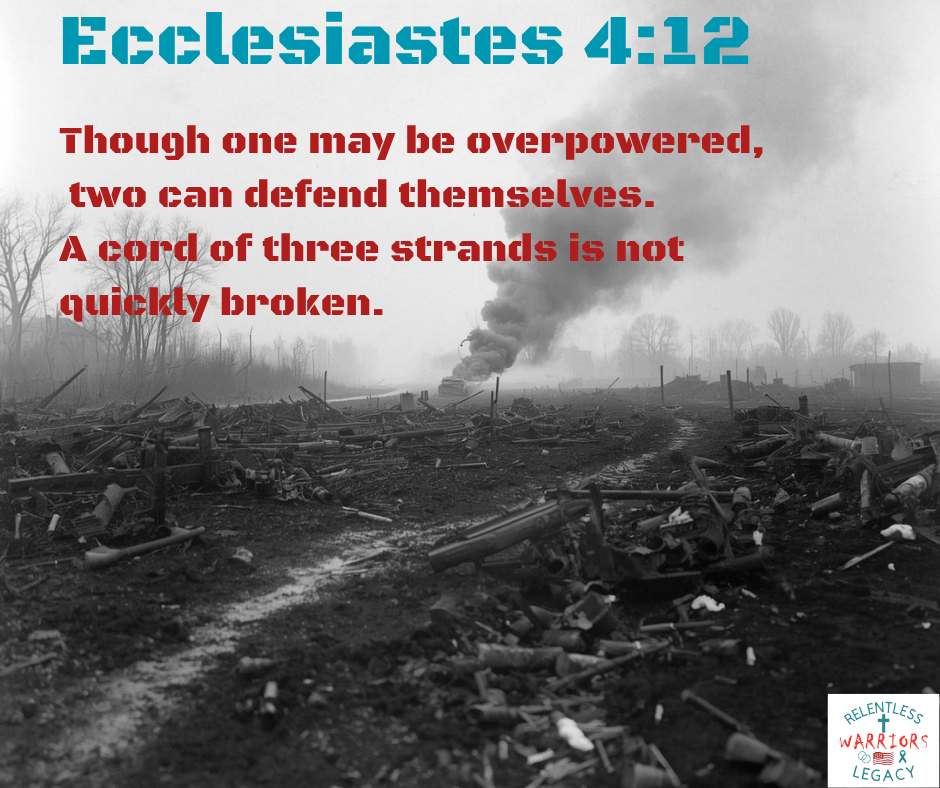
What if you invited God into that battle with you? As Scripture says, “Though one may be overpowered, two can defend themselves. A cord of three strands is not quickly broken.” — Ecclesiastes 4:12
God forms that third strand—creating a cord that is not easily broken. This means your marriage is stronger with Him than it could ever be without Him.
When I picture this, I see my husband and me standing hand in hand on that battlefield, with everything coming against us. And where is God?
He is the shield in front of us—protecting us.
He is also fighting on our behalf, pushing back the enemy in ways we never could on our own.
Same team.
Same battlefield.
Same mission.
With God at the center—
UNSTOPPABLE!
This battle becomes even harder when PTSD enters the marriage—and the home.
There were many times when I could not see Larry and me as being on the same team. We would scream and yell at each other, yet none of our problems were ever truly resolved. It became the same battle, over and over again, for 17 long years of marriage.
Unfortunately, we turned our home into a battlefield, with our children watching from the sidelines as spectators.
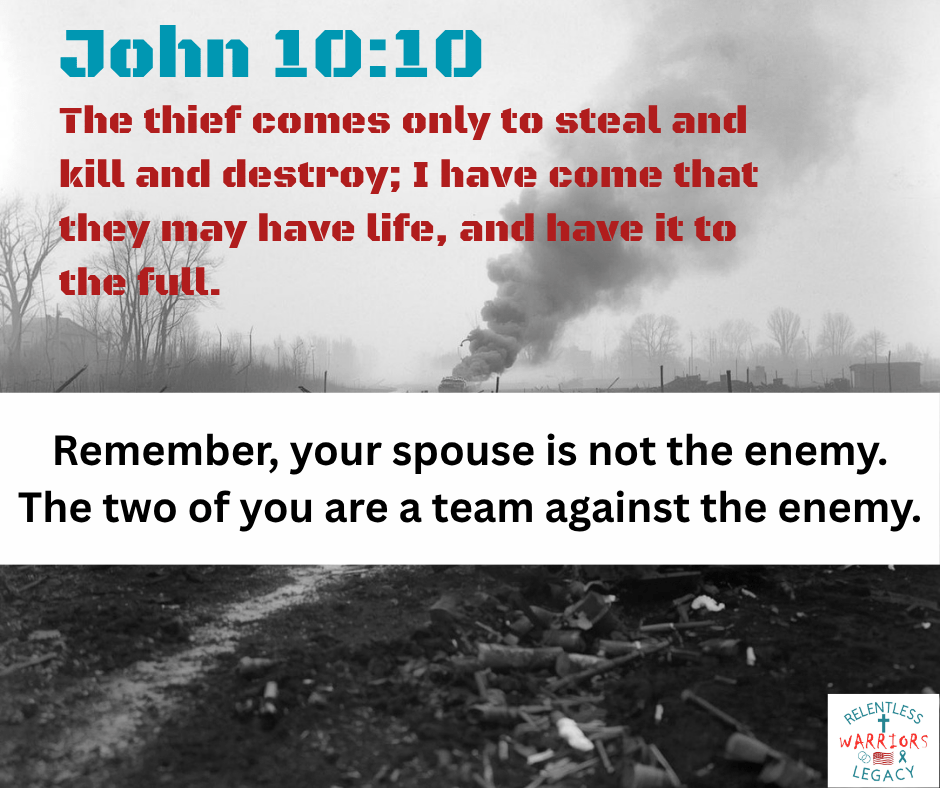
The true enemy is Satan, and he will use anything he can to come between a husband and wife. He especially loves when something like PTSD enters a marriage because it gives him more weapons to use—bullets, landmines, and barbed wire designed to divide two people from one another.
Satan seeks to destroy the bond between a husband and wife because when that bond is broken, it creates chaos within the entire family.
Want to know the secret to making sure you and your spouse stay on the same side of the battlefield? Communication.
You both have to learn how to truly communicate with each other—and with everyone living in your household.
Larry and I began with the Speaker/Listener technique. This was the beginning of saving our marriage because it opened lines of communication that had never existed between us before.
One of the biggest tools that helped Larry and I learn how to communicate was the Speaker/Listener technique. It sounds simple, but when emotions are high and difficult topics come up, this tool can completely change the direction of a conversation.
The way it works is this: one person holds an object. It can be anything—a pen, a small pillow, a coffee mug, or whatever you choose. The person holding the object is the only one allowed to speak. The other person’s job is not to interrupt, defend themselves, fix the problem, or prepare their next response. Their job is to truly listen.
When the speaker is finished, the listener repeats back what they heard to make sure they understood correctly. This is important because so many times we hear words through our own hurt, anger, or frustration instead of hearing what our spouse is actually trying to say. Once the speaker feels heard and understood, they pass the object to the other person so they can speak.
This technique slows conversations down and helps keep arguments from turning into attacks. It creates a safe space where both people can express feelings without being cut off, yelled over, or dismissed. It also helps couples stay focused on understanding each other instead of trying to “win” the conversation.
For Larry and I, this communication tool became one of the first steps toward healing our marriage. It opened the door to conversations we had avoided for years and helped us finally start hearing each other instead of just reacting to each other. It put us on the same side of the battlefield, fighting the enemy together!
So remember, even when something like PTSD enters your marriage, you and your spouse are still on the same side. The two of you are not enemies.
You can fight stronger together when God is at the center of your marriage, helping guide and strengthen both of you. There will always be arguments and difficult moments, but the key is learning how to handle them when tension is high and emotions feel out of control.
The Speaker/Listener technique is a great place to start!
For any questions, please reach out to Larry and me at relentlesswarriorslegacy@gmail.com
 Relentless Warrior's Legacy