


We are spending the month talking about relationships and communication. This is Melissa and I am sharing with you today the listening cycle. This cycle has been a corner stone in communication between Lawrence and I.
We fight hard when we do fight. I mean really hard. I am a yeller. When I get angry and frustrated, it comes out as yelling. Lawrence shuts down when I start yelling. So that means that nothing gets solved and we are both left still angry and frustrated. This is not a healthy or productive way to communicate.
When we started counseling with Chaplin Claypool he introduced us to the Listening Cycle.
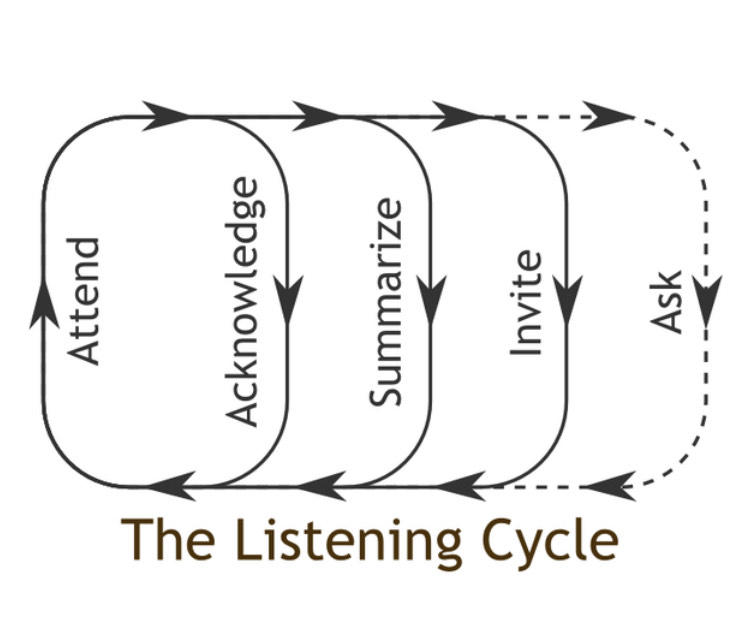
This cycle helps people actively listen. If you are not in a place where you can really listen to what is being said, then you are not ready to communicate. Listening is just as important as what the speaker is saying. James 1:19 ESV Know this, my beloved brothers: let every person be quick to hear, slow to speak, slow to anger;. This verse says everything you need to know about the Listening Cycle.
In this cycle, you have one person doing the speaking and one doing the listening. Both are important and you must follow the cycle for things to move forward productively. The listener will follow the cycle. First, be attentive. Look at the person who is speaking, listen to the words they are saying WITHOUT interrupting, and track the conversation. Next, acknowledge what the speaker is saying. Know that what the speaker is saying is important to them. Do not minimize what they are talking about and how they are feeling. Show active listening. The listener can nod their head or respond with kind yeses, and okays. Once the speaker is done, the listener can invite more information. Ask the speaker to tell them more.
Now this next part is extremely important. The listener must summarize what the speak has said. Things can get really lost in translation. Again, the listener can not minimize the seriousness of the issue and what the speaker has said. Also the listener might not have understood things correctly and when they summarize what they have heard, they might miss what the speaker is saying. This does not happen intentionally. People think differently which means they also hear differently. Lawrence and I realized through this cycle that we both communicate very differently. We do not really hear what each other says. So the summarizing part is important for us to make sure we have a complete understanding of what the other is saying.
The final step is for the listener to ask questions. Also another important thing in making sure there is complete understanding.
There is also another step to this. The TIME OUT! If things get to heated and yelling starts to happen then take a time out and come back to the discussion. But you have to come back to the discussion. If you do not you can spend years fighting over the same thing. That is not healthy or productive. It is okay to take a time out and is better than yelling and screaming at each other. Remind each other that this is suppose to be a calm way to communicate.
This cycle has changed the way Lawrence and I fight. Rarely do we end up in a yelling match. We do not push each other’s buttons with this cycle. It keeps us on task and on the current issue. We try as hard as we can to not bring up the past. We throw out that Rolodex that I talked about a few weeks ago. This cycle does what the Bible says in James. It slows things down in an argument so that people can be slow to speak and slow to anger. This makes all the difference in the world when it comes to communication.
Next week we will cover the Awareness Wheel and how this goes along with the Listening Cycle. If you have any questions please ask! You can find us on Instagram and Facebook under Relentless Warriors Legacy. Also please Like, Share, Comment, and Subscribe.
Have a wonderful weekend!
Melissa McGuire (Relentless)
;IGY6
 Relentless Warrior's Legacy