
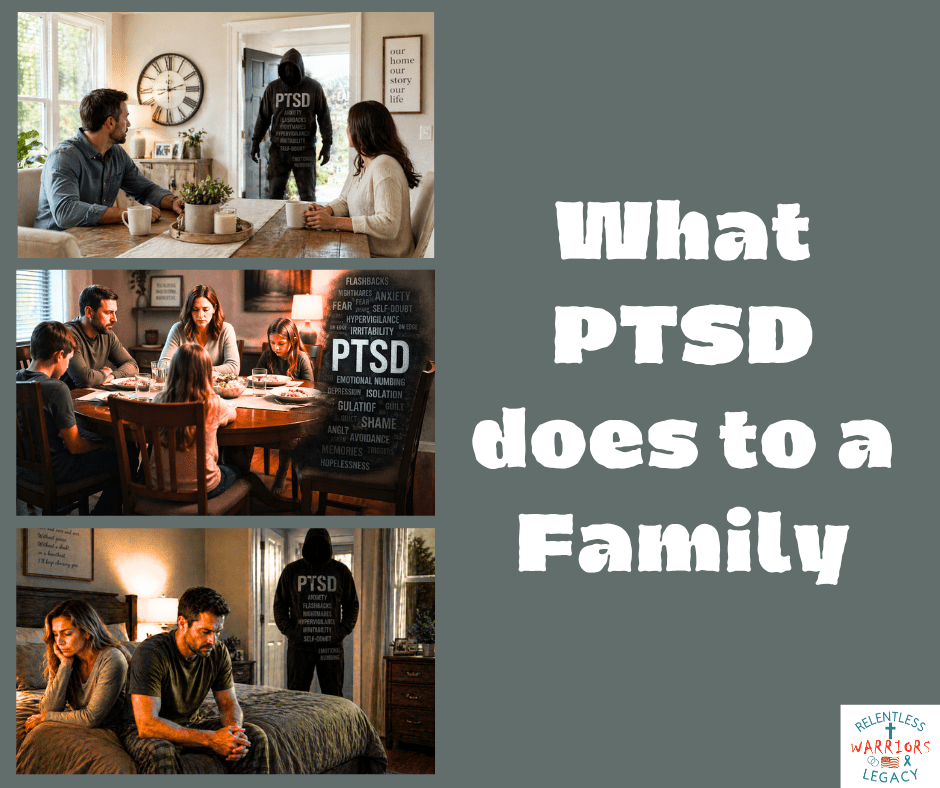
I will have to admit, at first, I did not see the effects PTSD was having on my family. It crept in like a thief in the night, slowly stealing from our marriage, our children, and the peace in our home.
Looking back now, I can clearly see how PTSD touched every part of our lives. I can see the damage it caused in our marriage, the tension it created in our home, and the weight our children carried while living in the middle of it all.
What hurts the most is realizing that even though the battle belonged to PTSD, the entire family was fighting the effects of it. And even now, I can still see some of the things our children carry with them from growing up in a home overshadowed by trauma.
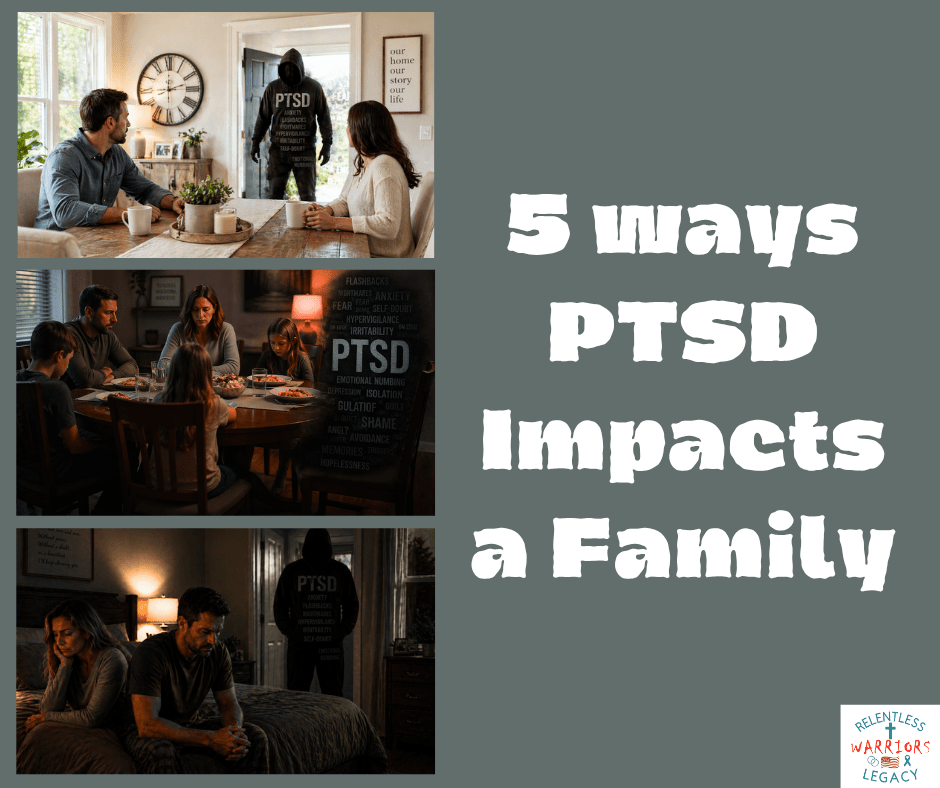
There are several ways PTSD can impact a family. We are going to look at five of the major areas that were affected in our home.
1.) Complete Breakdown in Communication
One thing I often say about PTSD is that it steals your ability to communicate. In our home, there was more yelling than talking. Larry would avoid us at all costs, and it felt like none of us had the right words to talk to each other or even to our children. Conversations turned into arguments, silence, or complete shutdown.
2.) Reactive Behavior
Larry and I both became extremely reactive in our behavior. The smallest thing could set either of us off. His anger became uncontrollable at times, and that anger spilled out everywhere. He would explode in public, and the kids and I were often embarrassed and overwhelmed by his reactions. Our home constantly felt like it was one step away from chaos.
3.) Breakdown in Trust
Because of the constant reactive behavior, trust began to break down in our family. I did not trust Larry, and our children stopped trusting us as their parents. When a home no longer feels emotionally safe, trust begins to disappear. Even today, rebuilding that trust with our children is something Larry and I are still working through.
4.) Secondary Trauma
This was something that took years for Larry and me to recognize. We could not fully see the effects PTSD was having on our children until we began learning about trauma in counseling. Our children were living in survival mode just like we were. They were carrying stress, fear, and emotional weight that children were never meant to carry.
5.) Chronic Stress
With everything happening in our home, chronic stress became normal for all of us. There was a constant heaviness and tension in the atmosphere. The kids did not know how to process what they were feeling, and Larry and I could not figure out how to get out of fight-or-flight mode. Our home felt like it was constantly at a boiling point, always ready to spill over.
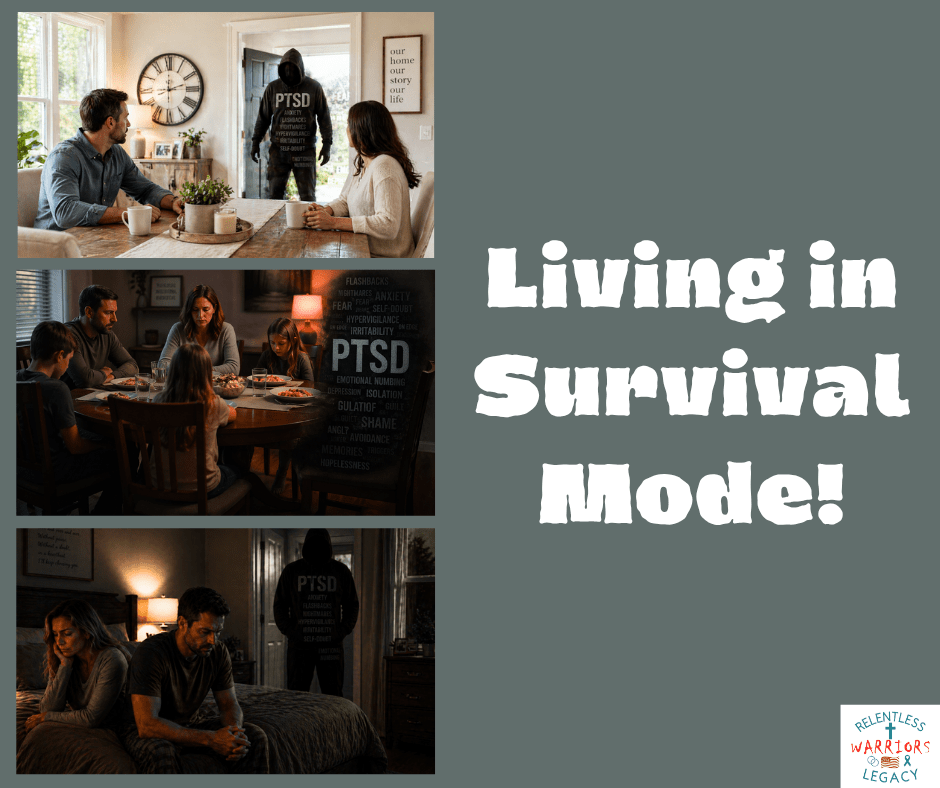
When Larry and I were both in the trenches with PTSD, our entire house lived in survival mode. The kids would tiptoe around us, trying not to set either of us off. Larry and I would scream at each other, and at times, we would scream at the kids too. We were highly reactive, and our home often felt unpredictable.
That environment led our two oldest sons to shut down emotionally. They developed their own form of survival mode.
Survival mode can look different depending on the person. My survival mode looked like shutting down, sleeping too much, overeating, neglecting my own well-being, and trying to protect our boys—or at least what I thought was protecting them.
For our kids, survival mode looked different. It meant hiding in their rooms, throwing themselves into sports or video games, avoiding public situations, and constantly watching what they said and did to make sure they did not upset Larry or me. They were always reading the room, trying to stay one step ahead of the next explosion.
Please understand something important: that was never their responsibility.
Children should never have to change who they are in order to protect themselves from a parent’s explosive behavior. They should never feel responsible for managing the emotions of the adults around them. It was never our children’s job to keep the peace in our home, and it is never the child’s fault when they find themselves living in survival mode.
God did not place children on this earth to serve their parents. He entrusted children to parents as a gift. Our responsibility as parents is to love them, cherish them, protect them, and help them grow into the people God created them to be. When trauma enters a home, that purpose can become blurred, but it never changes God’s design.
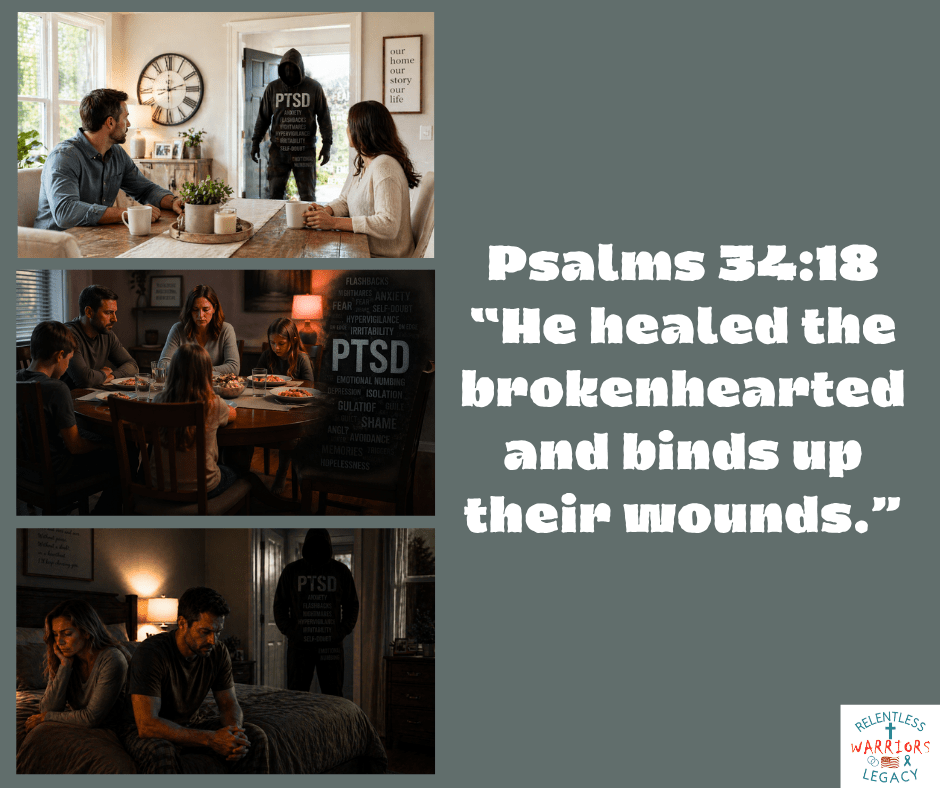
I think our verse for this week really speaks to the overwhelming love of God. He walks with us through the hard times. He was with Larry and me through all the arguments, and He was with our children as they lived in an explosive home.
Every aspect of our home was broken. Larry and I were on the verge of divorce. Our marriage needed healing. Our children needed healing. Our home needed healing.
That is where God stepped in and began to slowly change everything.
God brought us a counselor who gave us practical tools to help us navigate PTSD and its effects on our family. Larry learned to use an emotion wheel to identify and label what he was feeling instead of immediately reacting in anger. I began to understand what God’s love truly looks like and how to extend that love to others, even during difficult moments.
God taught us simple but powerful skills. We learned that something as simple as counting to ten can slow down our reactions and keep us from automatically yelling. We learned the timeout rule, where one of us can say we need to walk away from an argument, but we must also set a time to come back and continue the conversation. That one rule alone has saved us from countless hurtful words.
One of the biggest things God taught me was that Larry is God’s son just as much as I am God’s daughter. That realization changed the way I viewed him. Instead of seeing him as my enemy, I began to see him through God’s eyes. It made me want to treat him with love and respect rather than respond with yelling and anger.
None of these changes happened overnight. Learning to regulate emotions is hard work. It takes time, practice, and a willingness to keep trying even when you fail. It also takes walking with God daily so that His love guides your responses instead of your emotions controlling them.
Learning emotional regulation skills is one of the most powerful things you can do to begin healing your home.
As for our children, that process has taken time as well. They have had to learn how to trust Larry and me again. Rebuilding trust does not happen quickly. Consistent change over a long period of time is what helps people believe that the change is real and lasting.
That kind of consistency is difficult. Every slip-up can feel like it sets you back. There were times when we wondered if we would ever get there.
But by the grace of God, healing is possible.
Today, our family is living proof that PTSD does not have to have the final say. There was a time when our marriage was falling apart, our children were living in survival mode, and our home felt completely broken. If you had told me back then where we would be today, I would not have believed you.
But God.
God stepped into our mess and began doing what only He can do. He restored what was broken, taught us new ways to communicate, showed us how to regulate our emotions, and helped us rebuild trust one day at a time. The process was not quick, and it was not easy, but it was worth every step.
If PTSD has impacted your family, I want you to know there is hope. The healing may take time, and the journey may be difficult, but PTSD does not have to have the final say. God is still in the business of restoring marriages, healing families, rebuilding trust, and bringing peace into homes that feel hopeless.
No matter how broken things may seem today, God can write a different ending to your story.
For any questions, please reach out to Larry and me at relentlesswarriorslegacy@gmail.com
 Relentless Warrior's Legacy